Twyford and District Fishing Club has once again welcomed a delivery of coarse fish from the Environment Agency’s Calverton Fish Farm, with this year marking the fourth consecutive year of stocking at the club’s St Patrick’s Stream fishery.
The continued stocking programme appears to be producing positive results, with reports of young barbel being caught over the last couple of years. This provides encouraging evidence that previous stockings have established successfully and that the fish are surviving and thriving in the stream.
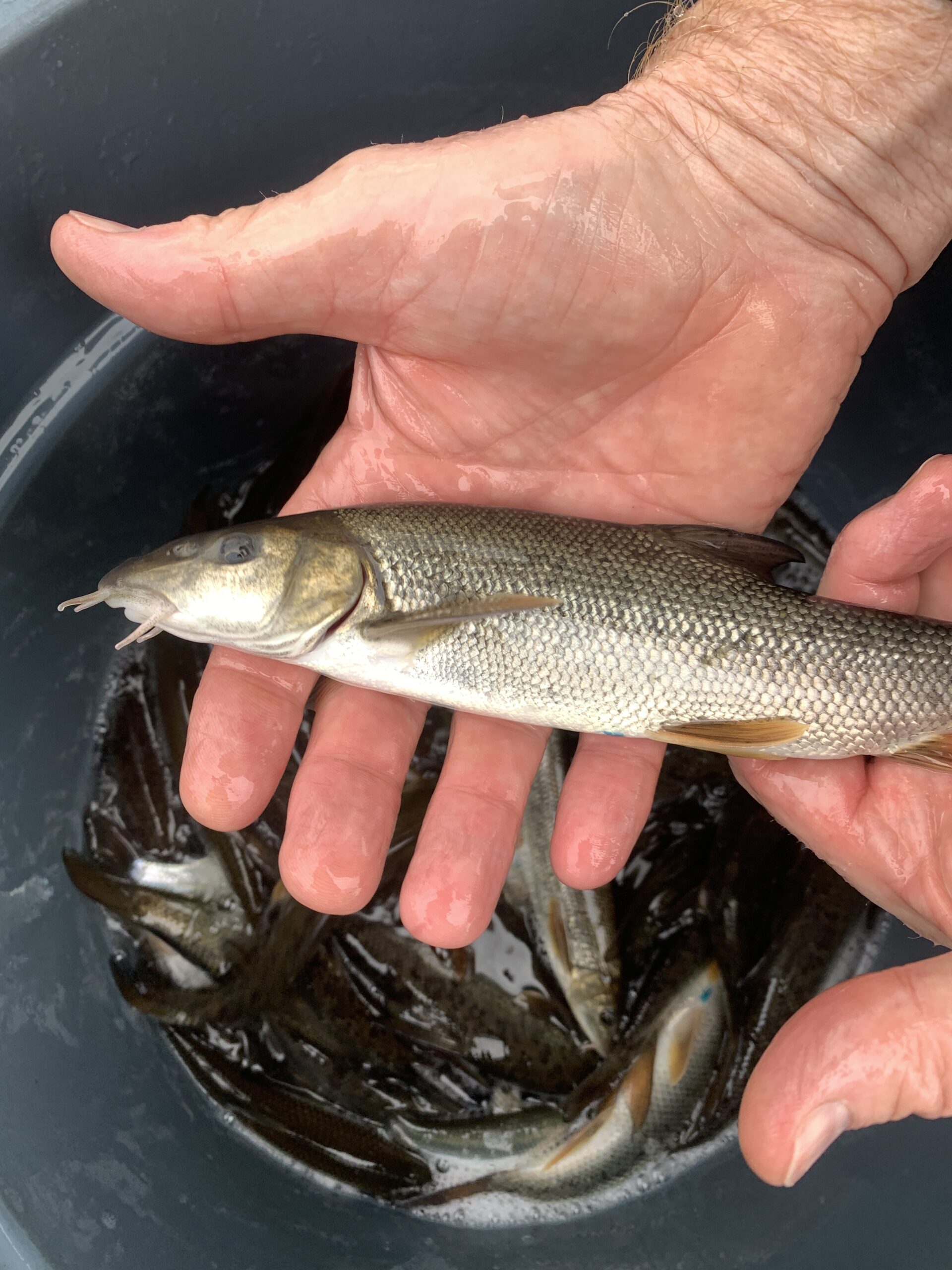
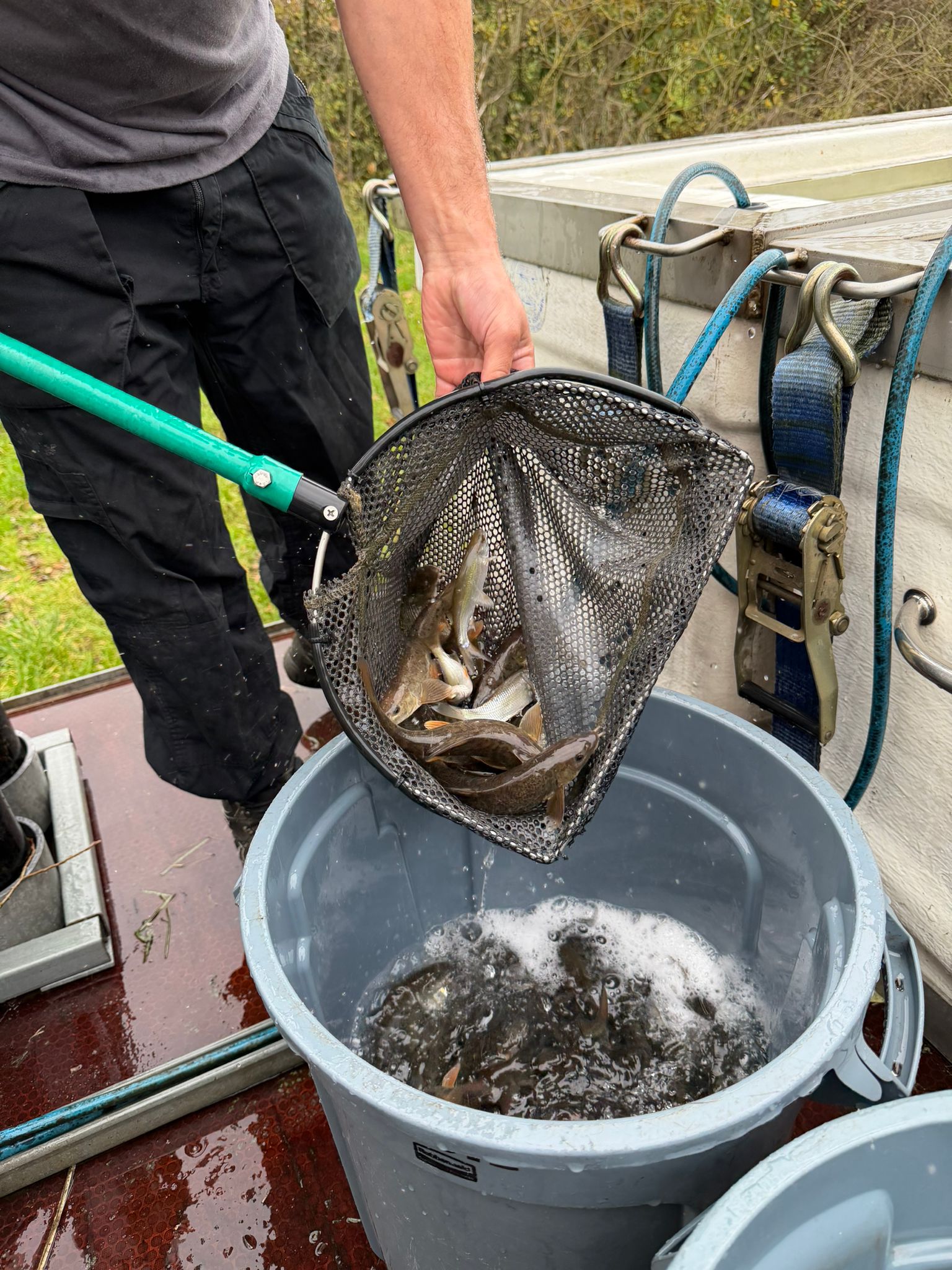
The latest delivery consisted of 450 fish, all approximately 18 months old, made up of 100 roach, 100 chub and 250 barbel. The fish made the journey from Calverton Fish Farm, near Nottingham, in oxygenated transport tanks, having set off early in the morning to ensure they arrived in good condition.
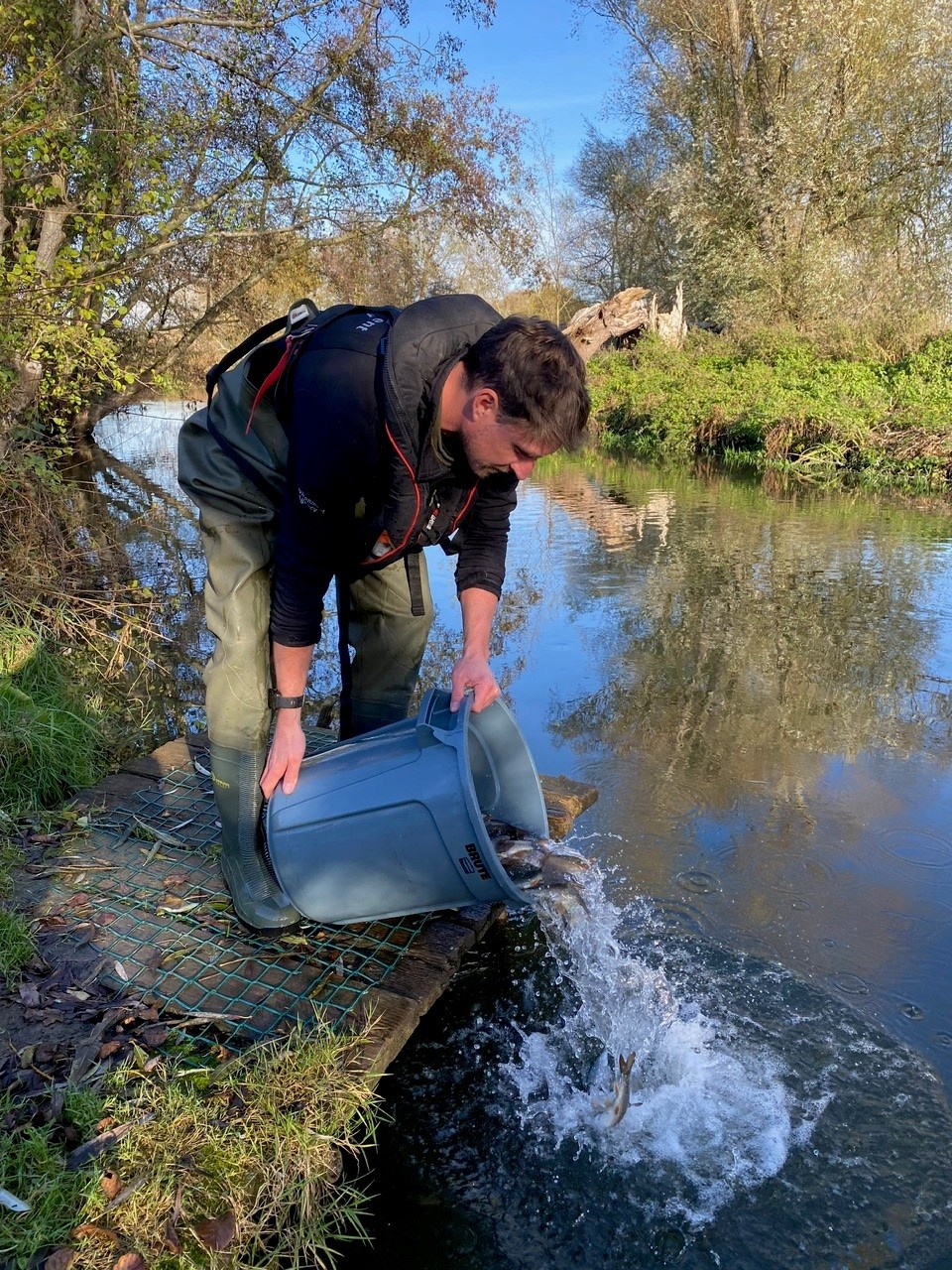
Although St Patrick’s Stream was running with relatively low flow for the time of year, the fish appeared in excellent condition. Having spent the summer growing in the farm’s earth ponds, they were well developed and quickly dispersed into the stream, seeking shelter among the available weed, vegetation and woody debris.
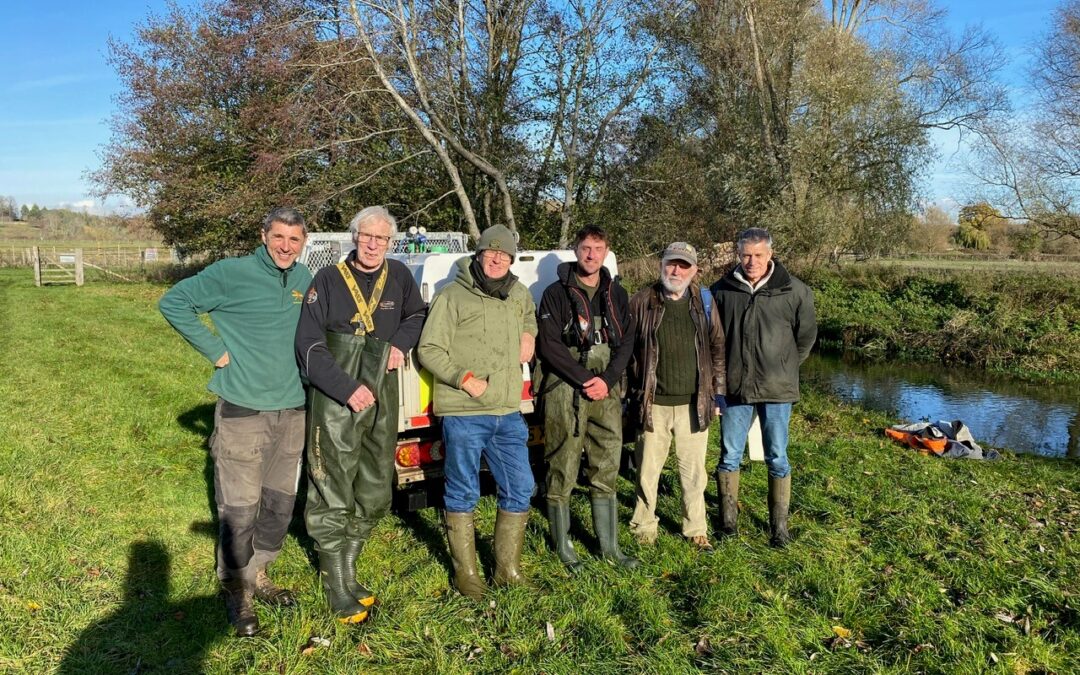
Members of Twyford and District Fishing Club were present to oversee the stocking and ensure the fish were successfully introduced into their new environment.
As part of an ongoing Environment Agency research project, barbel released into the Loddon catchment, including St Patrick’s Stream, have been given distinctive blue dye markings on the underside of their bodies. The project, which has been running in partnership with the Loddon Fisheries and Conservation Consultative (LFCC), involves releasing batches of marked barbel at various locations throughout the catchment.
The aim is to gather valuable information about the fish, including their growth rates, survival and movements following release, helping to establish how far they travel upstream or downstream from their original stocking locations.
Anglers are therefore asked to look out for any blue dye markings when catching barbel. If a marked fish is caught, please take a photograph and record its length and weight before passing the details on to a member of the TDFC committee. The information will then be shared with the Environment Agency and LFCC to assist with the ongoing research.
Calverton Fish Farm plays an important role in supporting fisheries throughout England, producing approximately 400,000 coarse fish each year. These are supplied to rivers, lakes and other fisheries across the country, helping to restore stocks following fish mortalities, support waters where habitat improvements have taken place and assist with the development of new fisheries.
The continued support from the Environment Agency is greatly appreciated, and the latest stocking represents another positive step towards improving fish stocks and the long-term future of St Patrick’s Stream.